
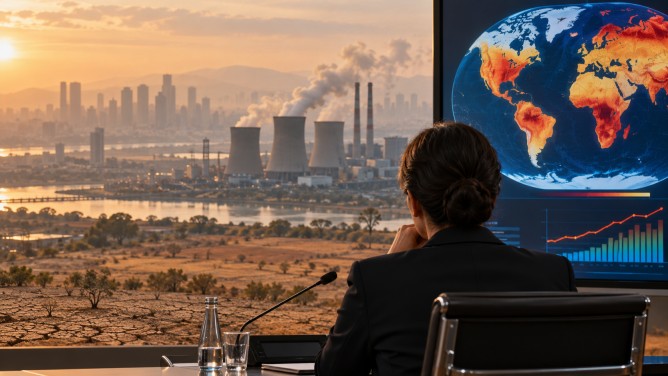
The United Nations Environment Programme (UNEP) has issued a stark warning that global greenhouse gas emissions must be reduced by 18% by 2030 to mitigate the severe impacts of climate change. This reduction is vital to increase the likelihood of limiting the rise in global temperatures to 1.7°C above pre-industrial levels, as outlined in a recent report.
The report underscores the urgent need for global action, as the world is currently off track to meet the 1.5°C warming limit established by the Paris Climate Agreement. Despite the current trajectory, the UNEP suggests that limiting the extent and duration of temperature overshoot is still achievable if immediate and effective measures are taken by governments worldwide.
While global emissions in 2025 remained similar to those of the previous year, this stagnation does not necessarily indicate a long-term decline, according to experts. The continued reliance on fossil fuels and uncertainties surrounding climate policies present significant obstacles, even as renewable energy technologies like solar and wind power grow rapidly.
Current national climate commitments fall short, with projections indicating that global temperatures could surge by approximately 2.6°C if countries adhere to their existing pledges. Under current policies, warming could reach 2.8°C, which would heighten the risks of extreme weather events, agricultural losses, and other climate-related disasters.
Experts are calling on major fossil fuel-producing nations to expedite the transition to cleaner energy sources and enhance their emission-reduction strategies. They emphasize the rapid expansion of renewable energy technologies, though political action lags behind scientific recommendations.
Reducing methane emissions is highlighted as a critical strategy for curbing global warming, given methane’s potent short-term warming effect compared to carbon dioxide. The report stresses the necessity for governments to bridge the gap between their climate commitments and their actual policy implementations.
The forthcoming global climate assessments by the UN are anticipated to play a pivotal role in evaluating national progress and spurring stronger commitments. Scientists caution that delaying action could lead to irreversible changes in the climate system, underscoring the urgency of the situation.