
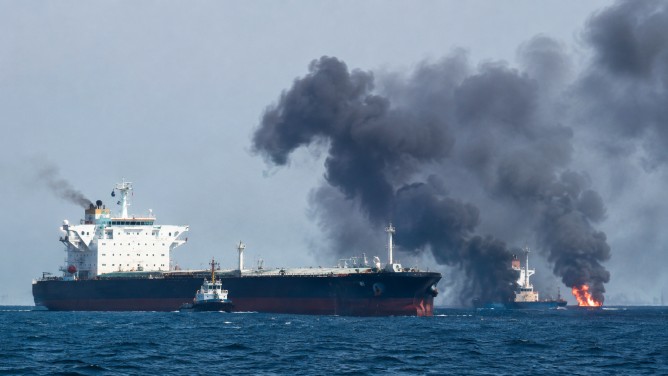
The Islamic Revolutionary Guard Corps of Iran has claimed responsibility for striking two oil tankers in the Strait of Hormuz, asserting that the vessels were under U.S. military escort and had violated Iran’s designated shipping route. In the aftermath, four additional tankers reportedly reversed course. The Strait of Hormuz is a critical channel for global energy shipments, and recent increased hostilities between Iran and the United States have led to significant disruptions in its navigation. This escalation has contributed to a rise in global crude oil prices, now exceeding $90 per barrel.
The heightened military tensions are not confined to the Strait of Hormuz. In Kuwait, authorities reported intercepting Iranian drones aimed at key military and strategic sites, fortunately without causing any casualties. Meanwhile, in Lebanon, Israel launched an extensive attack near Beaufort Castle, targeting what it described as Hezbollah infrastructure. Lebanese officials, however, have accused Israel of violating a ceasefire agreement, adding another layer of strain to an already volatile regional situation.
Amid these developments, U.S. President Donald Trump gathered his cabinet at Camp David to evaluate the conflict’s progression and its effects on the economy. The war has led to increased fuel and consumer prices, adding pressure on the administration. Public sentiment appears to be shifting as well, with recent opinion polls indicating a decline in support for the U.S. involvement in the conflict.
The ongoing unrest in the region has also had a significant impact on global markets, particularly benefiting major energy companies due to the surge in oil prices. This financial boost comes as a direct result of the reduced maritime traffic and the broader economic implications of the conflict.