
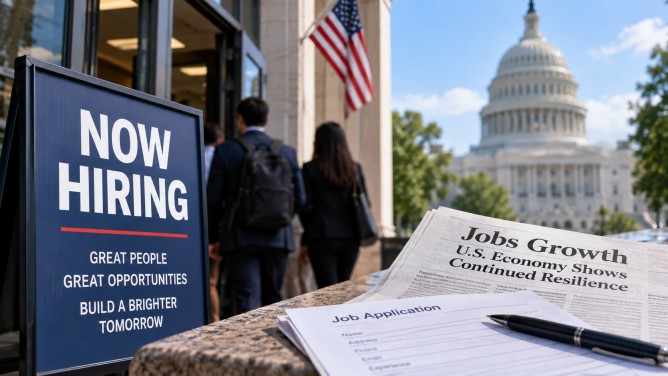
The U.S. economy showed signs of recovery in August, adding 162,000 jobs, a notable improvement following a sluggish summer for the labor market. Despite this growth, the unemployment rate held steady at 4.1%. This increase in job creation surpassed economists’ expectations, who had predicted at least 50,000 new jobs for the month.
In recent months, job growth has experienced significant fluctuations. March saw an addition of 214,000 jobs, but this momentum sharply declined to just 21,000 in July. The latest figures for August indicate a stronger performance, although the overall picture suggests a deceleration in hiring activity. Upward revisions to earlier estimates also painted a slightly better picture for previous months, with June’s job growth adjusted from 20,000 to 31,000, and July’s initially reported job loss of 23,000 revised to a gain of 21,000.
Private-sector employment saw a modest increase of 38,000 jobs in August, reflecting cautious hiring trends among businesses. Economists describe the current labor market as “slow hire, slow fire,” where companies are neither aggressively expanding their workforce nor engaging in significant layoffs. Job openings and layoffs showed little change in July, while the number of workers voluntarily leaving their jobs remained steady, indicating a lack of confidence among employees in finding new opportunities.
Persistent inflation continues to exert pressure on the labor market. U.S. inflation rose from 2.4% in February to 3.4% in July, placing additional financial strain on households with rising prices. At the same time, increasing bond yields have raised concerns about borrowing costs, as higher Treasury yields may lead to more expensive mortgages, car loans, and student debts, further burdening consumers.
The Federal Reserve finds itself in a challenging position, needing to balance controlling inflation with supporting employment. While higher interest rates could help bring inflation closer to the Fed’s 2% target, further rate hikes might weaken an already slowing labor market. President Donald Trump has been vocal in advocating for lower interest rates, arguing that reduced borrowing costs would bolster the U.S. economy.