
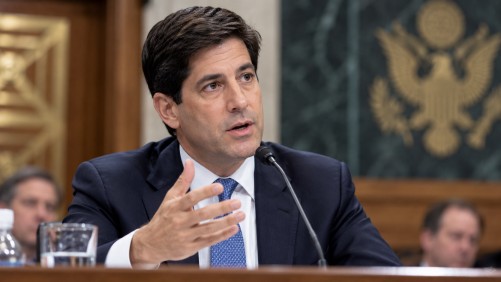
The U.S. Federal Reserve has increased its benchmark interest rate by 0.25 percentage points, setting it between 3.75% and 4%, as it continues its campaign to combat persistent inflation. This rate hike is the first since July 2023, and it signifies ongoing concerns about inflationary pressures despite relatively stable unemployment levels.
Federal Reserve Chair Kevin Warsh emphasized that inflation remains too high, with recent data not showing significant improvement in underlying price pressures. This stance is in contrast to U.S. President Donald Trump’s call for substantially lower interest rates to reduce borrowing costs, a position that has drawn attention to the independence of the Federal Reserve in setting monetary policy.
The Fed’s projections suggest that another rate increase could occur before the end of the year, as officials anticipate that inflation will take several years to return to the central bank’s preferred 2% target. High energy prices have exacerbated inflationary pressures, affecting both households and businesses and contributing to volatility in the bond market.
Interest rates are a tool the Federal Reserve uses to influence economic activity by affecting borrowing costs for mortgages, car loans, student debt, and business loans. While higher rates can help curb demand and manage price pressures, they also increase the cost of borrowing for consumers and businesses.
The recent decision follows a period of significant monetary tightening, with the Fed having raised rates repeatedly in 2022 and 2023 after inflation hit 9.1% in June 2022. The benchmark rate was previously as high as 5.25%-5.5% before the central bank began cutting rates in 2024 and 2025, prior to this latest increase.
Persistent inflation has impacted household purchasing power and consumer sentiment, with recent reports indicating a weakening in inflation-adjusted wages. As the Federal Reserve continues to navigate these economic challenges, its policy decisions remain closely watched by markets and policymakers alike.