
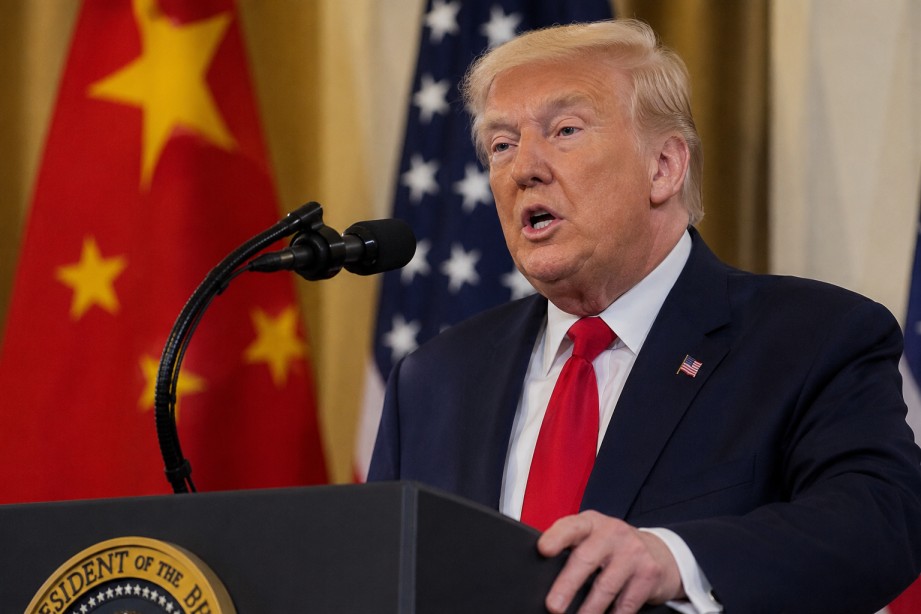
In a renewed push against alleged foreign interference, former US President Donald Trump has once again blamed China for meddling in the 2020 presidential election. Trump announced the declassification of certain intelligence documents and has called on federal agencies to look into what he claims are concealed vulnerabilities in the US election security system. During a televised address, he pointed out what he perceives as a lack of public trust in the electoral process and urged the Department of Justice, FBI, CIA, and the Office of the Director of National Intelligence to investigate the intelligence handling related to the 2020 election. In addition, he encouraged Congress to enact more stringent voter identification laws.
Trump’s assertions have faced strong opposition from Democratic leaders, who argue that several investigations, as well as assessments from intelligence agencies, have found no evidence that foreign interference swayed the results of the 2020 election. They highlight that various courts, audits, and recounts have confirmed the election’s integrity. Critics have accused Trump of attempting to erode confidence in the electoral process as the country approaches the upcoming congressional midterm elections.
China has refuted the allegations, maintaining its consistent stance of non-interference in the domestic affairs of other nations. The Chinese government reiterated its denial in response to Trump’s claims. Moreover, a US intelligence assessment published in 2021 concluded that no foreign power, including China, manipulated the technical aspects of the 2020 US voting process.
These developments have sparked a fresh debate over election security and the role of foreign influence in US politics. While Trump’s statements have garnered attention, they also reignite discussions on the measures necessary to protect the electoral process. The issue of voter identification continues to be a contentious topic in Congress, with arguments over how to balance security with access to the ballot box.
The allegations and subsequent denials come at a time when the political landscape is intensely focused on the integrity and security of elections. As midterm elections approach, the discussion around these topics remains vital, with both major political parties aiming to reassure voters of the transparency and fairness of the electoral system.