
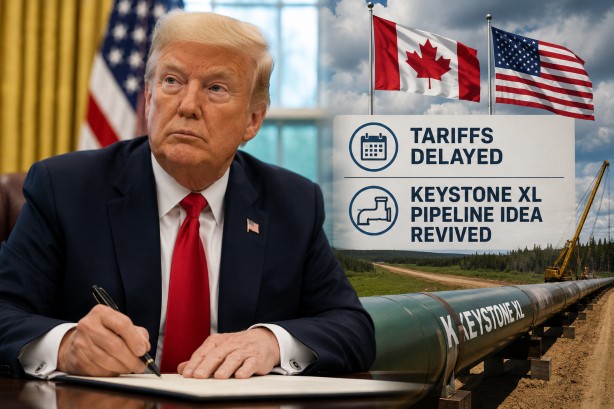
US President Donald Trump has announced a three-day delay in implementing a planned 50% tariff on Canadian goods, citing progress in trade negotiations between the United States and Canada. The delay comes as both nations work towards finalizing a new trade agreement, with Trump expressing optimism about the deal’s completion. Canadian Prime Minister Mark Carney echoed this sentiment, acknowledging “substantial progress” while noting that further negotiations are still required.
The proposed tariffs would have impacted billions of dollars worth of Canadian exports, including items such as wine and hockey equipment. The postponement allows more time for both parties to iron out the details of the agreement, potentially averting the economic strain the tariffs could impose on Canadian businesses. The delay also indicates a move towards easing the recent tensions that have strained US-Canada relations, characterized by ongoing threats of tariffs and retaliatory trade measures.
In a related development, Trump hinted at the possibility of reviving the controversial Keystone XL oil pipeline project, suggesting it “may be awoken from the grave.” However, he did not elaborate on how this project might relate to the ongoing trade talks. The Keystone XL pipeline was intended to transport oil from Canada’s western oil fields to US refineries but was halted after a crucial US permit was revoked in 2021. The project faced significant opposition from environmental groups, landowners, and Indigenous communities.
The backdrop of these negotiations is a complex trading relationship between the US and Canada, with both countries exchanging hundreds of billions of dollars in goods and services annually. The proposed tariffs have raised alarms among Canadian businesses, concerned about potential cost increases and diminished access to the US market. As negotiations continue, the delay provides a window of opportunity for both nations to reach a mutually beneficial agreement.