
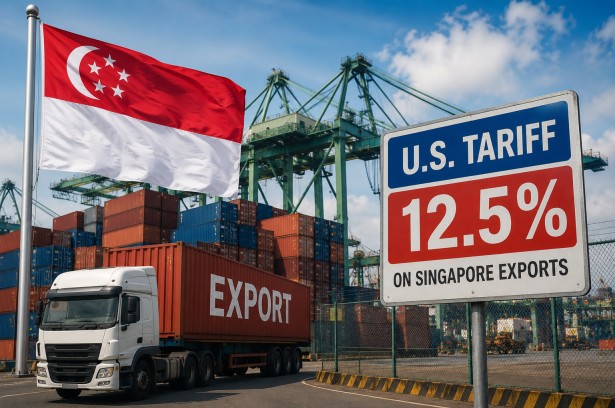
The United States has announced a new 12.5% tariff on roughly one-third of Singapore’s exports, due to concerns over the enforcement of labor laws. This move is part of a larger U.S. trade policy impacting numerous global economies. The imposition of this tariff has sparked a strong response from Singapore, which denies the allegations and insists it has a robust legal framework in place to combat forced labor. Singapore’s Ministry of Trade and Industry emphasized that they do not condone such practices and expressed a desire to engage in further discussions with U.S. trade officials to understand how the tariff will be enforced.
While the tariff targets a significant portion of Singapore’s exports, certain key sectors are exempt from this measure. Exempted items include pharmaceuticals, semiconductors, certain electronics, aerospace products, energy products, as well as goods already subject to specific U.S. tariffs. Despite these exemptions, the introduction of the tariff has raised concerns among business groups, who warn of increased uncertainty for manufacturers and exporters operating in these industries.
The U.S. government’s decision comes amid an ongoing investigation that could potentially lead to additional trade restrictions. This has prompted industry leaders to advise companies to consider diversifying their export markets and bolstering their supply chain resilience to mitigate potential disruptions. The current trade environment underscores the need for businesses to navigate a complex and evolving landscape, with potential implications for international trade dynamics.
Singapore has voiced its commitment to continue engaging with U.S. authorities to address the concerns raised and to clarify the specifics surrounding the tariff’s implementation. The Ministry of Trade and Industry remains in active dialogue with U.S. trade officials to prevent any misunderstandings and to reinforce Singapore’s stance on forced labor.
As the situation unfolds, manufacturers and exporters in Singapore are closely monitoring developments, aware that the U.S. investigation’s outcome could significantly impact their operations. The emphasis on diversifying export markets and enhancing supply chain strategies highlights the proactive steps industries are considering to navigate potential challenges posed by changing trade policies.