
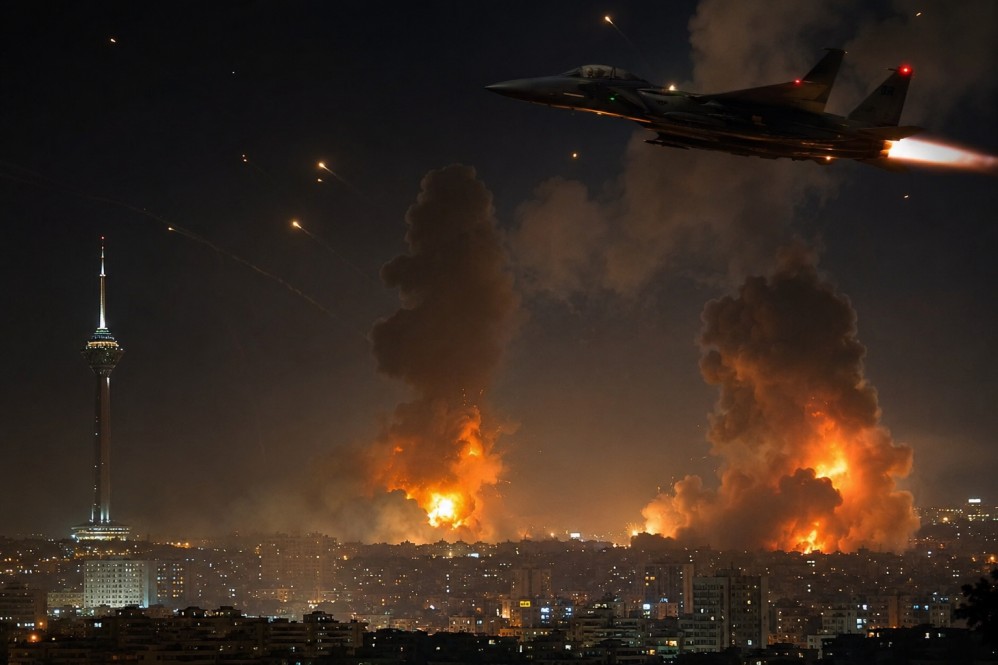
The United States has conducted airstrikes on Iran for three consecutive nights, with President Donald Trump unveiling plans to impose a maritime blockade on the nation. Additionally, a 20% tariff is set to be applied to cargo passing through the Strait of Hormuz, a critical waterway, under U.S.-controlled security measures. According to the U.S. Central Command, the airstrikes aim to undermine Iran’s military capabilities and prevent potential attacks on commercial vessels and civilians traversing this strategically vital route.
President Trump emphasized the continuation of military actions against Iran, asserting the U.S.’s commitment to maintaining security control over the Strait of Hormuz. This development follows incidents where two UAE oil tankers were reportedly targeted by Iranian cruise missiles in Omani waters, resulting in the death of an Indian crew member and injuries to several others. Consequently, tensions have escalated, causing Brent crude oil prices to surge by nearly 8%, highlighting concerns about global energy supply stability.
Iran has strongly criticized the proposed blockade, accusing the United States of jeopardizing international energy security. Tehran has also issued warnings that any efforts to restrict its access to the maritime route will be met with a robust response. Meanwhile, international maritime authorities have pointed out that imposing mandatory transit fees in international waterways lacks a legal foundation under existing international law.
The escalating military conflict has sparked fears of a broader regional crisis. Continued hostilities have disrupted shipping activities, driven up oil prices, and injected uncertainty into the global economy. The situation underscores the high stakes involved in the Strait of Hormuz, through which a significant portion of the world’s oil supply is transported.