
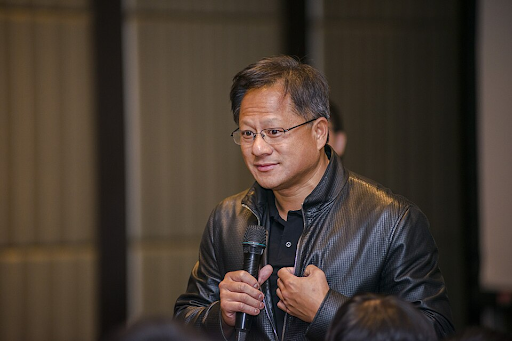
In a keynote that will be remembered for years, Nvidia CEO Jensen Huang drew a bold parallel. He declared that the “ChatGPT moment for physical AI is here,” signaling a paradigm shift where machines begin to understand and reason about the physical world just as language models understand text.
The vehicle for this revolution is Alpamayo, Nvidia’s new AI for self-driving cars. Huang explained that the technology combines visual perception with language-like reasoning. This allows a car to look at a complex scene—like a busy intersection with a broken light—and “think” through the rules and safety requirements to find a path.
This is a massive leap from pattern matching. It means the AI can handle novel situations it has never seen before by applying logic. Huang stated that this reasoning capability allows cars to drive safely in complex environments and explain their decisions, bridging the gap between human and machine intelligence.
The technology is arriving immediately. Nvidia partnered with Mercedes-Benz to launch the CLA, a car powered by this new “physical AI,” in the US in the coming months. A video demonstration showed the car navigating San Francisco, proving that this “moment” is not theoretical—it is on the road today.
Supported by the immense power of the new Vera Rubin chips, Nvidia is leading the charge into this new era. By giving physical machines the ability to reason, they are opening the door to a future where robots are capable, communicative, and safe partners in our daily lives.